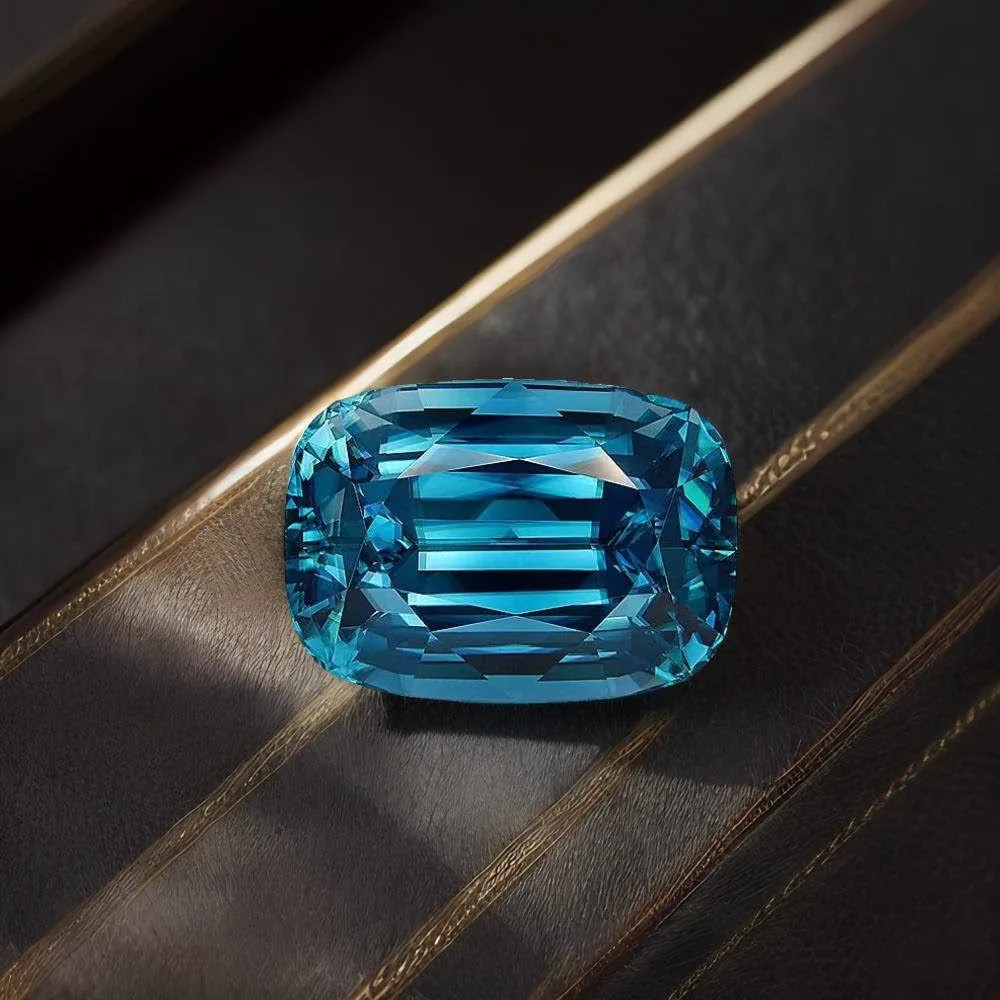
One province supplies the blue
Gary Roskin, writing in JCK in 2003, reported that heated blue zircon comes only from Ratanakiri Province in the far northeast of Cambodia. He noted that some dealers wrongly name Pailin as the source, because the rough passes through Pailin on its way to Thailand for cutting and treatment.
The International Gem Society (IGS) also names Cambodia as the main source of blue and colourless zircon. Roskin reported that a new Cambodian deposit began producing in about 2000.
From brown to blue
The rough comes out of the ground brown. Heat changes it. Roskin described the trade practice in which rough that does not turn blue, or turns out poorly, goes back into the furnace. That second heating can produce yellow stones, and a further heating can turn those colourless.
A 2018 study in The Journal of Gemmology by Zeug, Nasdala and colleagues gives the conditions. Untreated brown Ratanakiri zircon turns blue when heated under reducing conditions, meaning with little oxygen, at roughly 900 to 1000 degrees Celsius.
The study found that the material holds remarkably low levels of trace elements and that heating causes no measurable change to its crystal structure. The blue comes from an absorption band whose cause is still not settled. The authors link it to a change in the charge of an element during heating and leave the question open.
Is heated blue zircon natural?
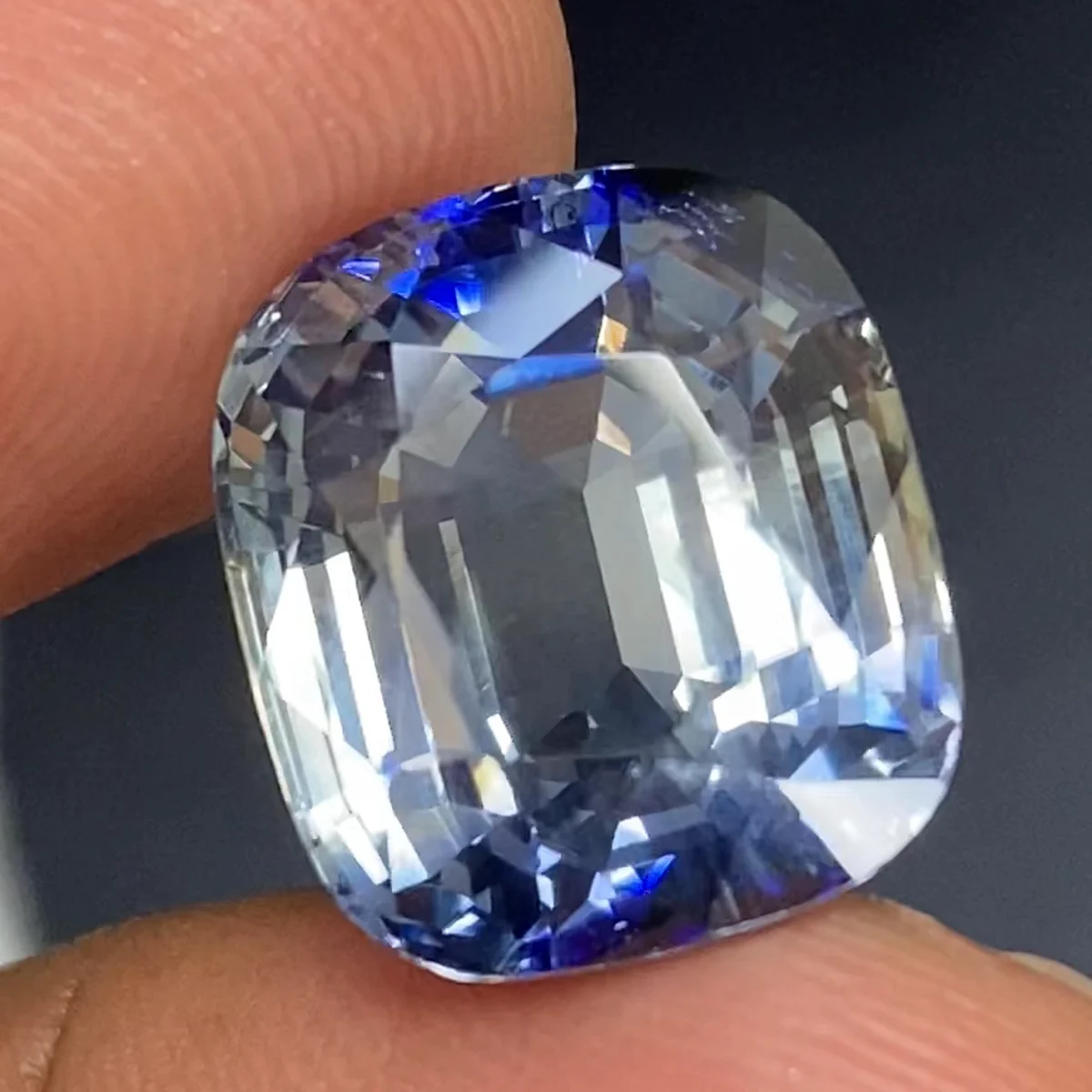
Yes. The stone is natural zircon. Only the colour is changed by heat. IGS says nearly all blue and colourless zircon is heat treated and that the treatment cannot be detected.
That makes disclosure simple. Assume a blue zircon is heated. A seller should say so, and a good seller does without being asked.
How stable is the colour?
IGS says the colour of heated blue zircon is less stable to light than heated green or yellow zircon. Keep blue zircon out of long, strong sunlight when you are not wearing it.
Heat is a bigger risk. Roskin reported that a jeweller's torch can turn blue zircon green or grey. Tell any jeweller who sizes or repairs a zircon ring to keep the flame away from the stone.
He also noted that yellow made from brown rough is unstable. It turns brown in sunlight and returns to yellow after about a day in the dark.
Sizes and cutting
Roskin reported rough of up to 5 grams, or 25 carats, as readily available and rough of 6 to 12 grams as only sporadic. Cutting recovered about 25 to 30 percent of the weight, so a gram of rough gave a stone of about a carat or less. He described faceted blue zircon over 20 carats as rare.
Zircon rewards careful cutting. IGS gives it a dispersion of 0.039, which means strong fire, and notes that strong double refraction makes a stone look fuzzy if the cutter does not orient the table correctly.
Wearing blue zircon
IGS gives zircon a hardness of 6 to 7.5 and calls it brittle, so facet edges chip and wear. It recommends protective settings for rings and calls pendants and earrings safer.
Clean it with warm water, mild detergent and a soft brush. IGS warns against ultrasonic cleaners.
A gem with an old history
Zircon is not a new gem. Roskin notes that Sri Lanka's gem gravels have produced it for more than a thousand years, that M. H. Klaproth named it in the late 18th century and that colourless zircon once sold in Indian bazaars as jargoon and as Matara diamond.
It is natural zircon silicate and has nothing to do with lab made cubic zirconia. Our earlier blue zircon guide covers the optics in more detail.
Looking for a stone like this?
We keep stock in Bangkok and answer questions about grading, treatment and price without pressure.

Join the conversation
Ask a question or share what you have seen. We read every comment and reply to the good questions.
Loading comments